
In today’s fragmented digital ecosystem, a single brand can appear in dozens of variations across different platforms, databases, and marketing materials. A company might be listed as “Salesforce, Inc.” in one system, “salesforce” in another, and “SFDC” in internal reports. This inconsistency creates chaos—for data analytics, customer experience, trademark protection, and search engine optimization. Brand name normalization is the systematic process of standardizing brand names across all channels, databases, and communications, ensuring a consistent, legally defensible, and operationally efficient brand presence .
What Are Brand Name Normalization Rules?
Brand name normalization rules are a set of standardized guidelines that govern how a brand name must appear across all official communications, databases, and digital platforms . These rules cover capitalization, spacing, punctuation, special characters, abbreviations, and legal suffixes (such as “Inc.” or “LLC”).
Think of normalization as creating a single source of truth for your brand identity. It transforms messy, inconsistent data into clean, structured, and standardized information that can be reliably used across your organization. This is essential for CRM systems, marketing analytics platforms, product catalogs, and any database where brand names serve as key identifiers .
Key components of normalization rules include:
- Exact spelling (official and approved variations)
- Capitalization patterns (title case, all caps, or intentional lowercase)
- Trademark symbol usage (™ or ®, and where to place them)
- Grammatical treatment (using the brand as an adjective, not a noun or verb)
- Prohibited shorthand or abbreviations
Why Is Brand Name Normalization Important?

Brand name normalization is not merely an aesthetic exercise—it carries significant legal, operational, and marketing implications.
1. Legal Protection and Trademark Defense
From a legal perspective, brand name normalization is essential for maintaining trademark strength and enforceability . Courts routinely examine how a company uses its brand across marketing materials, websites, contracts, and social media. Inconsistent use—varying capitalization, casual shorthand, or generic treatment—can be used as evidence that a brand is generic or uncontrolled, weakening trademark rights .
Consider the legal risk of “genericide,” where a brand name becomes the generic term for a product category. Examples include “Aspirin,” “Thermos,” and “Escalator”—once proud trademarks that lost their legal protection due to widespread generic use. Proper normalization reduces this risk by consistently reinforcing the brand as a source identifier .
2. SEO and Search Visibility
Search engines rely on consistency to understand and rank brand entities . When your brand appears with multiple variations across the web, you dilute your search equity, confuse algorithms, and may fail to establish entity recognition. The University of Exeter Web Team found that cleaning up brand inconsistencies and legacy indexed pages increased their Bing traffic by 26.5% without adding new content—proving that brand hygiene directly impacts search performance .
Additionally, consistent brand naming ensures:
- Improved click-through rates through recognizable brand presentation
- Better entity recognition by Google’s Knowledge Graph
- Strengthened branded search signals
3. Data Quality and Analytics
Inconsistent brand names cripple data analytics. Product catalogs, CRMs, and analytics platforms cannot accurately aggregate, deduplicate, or report on data when the same brand appears in multiple forms. Nestlé, operating across 185 countries with over 3,000 brands, faced massive data fragmentation before standardizing its marketing data foundation. Through rigorous normalization, they achieved a 96% data accuracy rate globally and saved 77,000 hours of manual reporting work annually .
Poor metadata and inconsistent naming make advanced analytics “impossible,” as one Colgate-Palmolive executive noted . When every regional team creates their own taxonomy, reporting and optimization become exercises in frustration.
Key Principles of Brand Name Normalization
Effective brand name normalization rests on several foundational principles. These guide your decision-making and ensure your rules are robust, scalable, and legally sound.
PrincipleDescriptionConsistencyApply the same rules across all platforms, departments, and regions. No exceptions without governance approval.ControlMaintain a centralized brand dictionary or master list of approved brand names and their canonical form.ClarityNormalized names should be clear, unambiguous, and easily matched by systems.Legal DefensibilityUse the brand as an adjective, include trademark symbols where required, and avoid generic usage .Flexibility with StructureBalance standardization with exceptions for brands that intentionally use unconventional styling (e.g., “eBay,” “iPhone,” “adidas”) .
Common Brand Name Variations and Inconsistencies
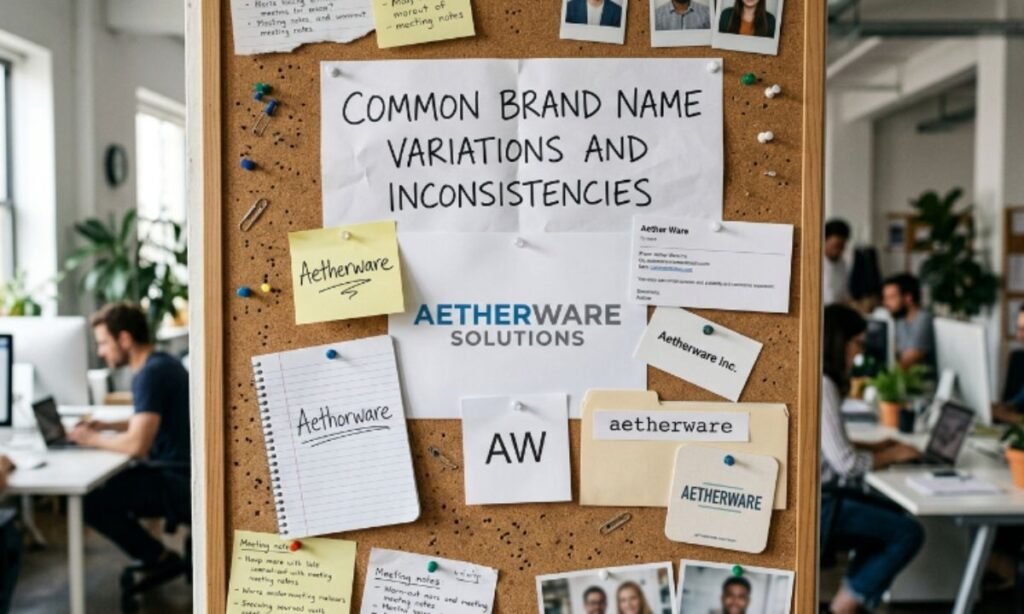
Before you can normalize, you must understand the types of variations that plague brand data. These are the “dirty data” sources that create duplicates, confuse customers, and weaken your brand authority.
1. Capitalization Variations
- “netflix” vs. “Netflix” vs. “NETFLIX”
- “microSOFT” vs. “Microsoft”
- “johnson & johnson” vs. “Johnson & Johnson”
2. Legal Suffix Variations
- “Salesforce, Inc.” vs. “Salesforce Corporation” vs. “Salesforce”
- “Sony Corporation” vs. “Sony Corp.” vs. “Sony”
3. Punctuation and Special Characters
- “L’Oréal” vs. “L’Oreal” vs. “Loreal”
- “H&M” vs. “H and M” vs. “H & M”
- “McDonald’s” vs. “McDonalds”
4. Abbreviations and Acronyms
- “IBM” vs. “International Business Machines”
- “AT&T” vs. “ATT” vs. “American Telephone & Telegraph”
- “Mfg” vs. “Manufacturing”
5. Prefixes and Geographic Qualifiers
- “The Home Depot” vs. “Home Depot”
- “Google LLC” vs. “Google UK Limited” vs. “Google Ireland Limited”
6. Trademark Symbols
- “Nike®” vs. “Nike” vs. “NIKE”
- “Coca-Cola™” vs. “Coca-Cola”
How to Standardize Brand Names Correctly
Standardization is a systematic process, not an ad-hoc cleanup project. Follow this step-by-step framework to implement robust brand name normalization.
Step 1: Audit Your Current Brand Data
Before applying rules, understand your current state. Compile all brand name instances from:
- CRM and ERP systems
- Product catalogs and e-commerce platforms
- Marketing databases and email lists
- Website metadata, title tags, and schema markup
- Social media profiles and content
- Partner and vendor data
Step 2: Define Two Versions: Display Name and Normalized Name
A powerful best practice is maintaining two distinct forms of each brand name :
- Display Name: The public-facing, styled version for users (e.g., “Levi’s,” “L’Oréal,” “The North Face”). This preserves brand aesthetics, accents, and special characters.
- Normalized Name: The clean, machine-friendly version used for matching, deduplication, and analytics (e.g., “levis,” “loreal,” “thenorthface”). This is typically lowercase with punctuation and special characters removed .
This separation lets you respect brand style while maintaining clean data for operational systems.
Step 3: Establish a Canonical Brand Dictionary
Your brand dictionary is the single source of truth. It includes:
- The official brand name (display version)
- The normalized form (for system matching)
- Any acceptable aliases or abbreviations
- Specific rules for that brand (e.g., preserve “eBay” casing, retain “The” for “The Home Depot”)
Step 4: Implement and Apply Your Rules
Now apply a standardized rule set. The following rules are widely adopted across industries and should form your baseline .
Brand Name Normalization Rules and Best Practices
Rule 1: Standardize Capitalization
Inconsistent casing creates matching failures and looks unprofessional.
- For normalized names: Use lowercase consistently (e.g., “nike,” “apple,” “sony”). This simplifies matching and avoids case sensitivity issues.
- For display names: Use the brand’s official styling (e.g., “Nike,” “Apple,” “Sony”).
- Intentionally stylized brands: Create dictionary exceptions for brands with non-standard casing, such as “eBay,” “iPhone,” “adidas” (intentionally lowercase), and “3M” .
Rule 2: Remove Legal Suffixes
Legal entity designations rarely add value for matching or display purposes.
Suffixes to remove (unless part of the core brand):
- US: Inc., Incorporated, Corp., Corporation, LLC, L.L.C., Ltd., Limited, Co., Company, LP, LLP
- UK: Ltd, Limited, PLC, LLP
- Germany: GmbH, AG, KG, OHG
- France: SA, SAS, SARL
- International: Pty Ltd, BV, NV, SpA, AB
Before → After:
- “Salesforce, Inc.” → “Salesforce”
- “HubSpot LLC” → “HubSpot”
- “Deutsche Bank AG” → “Deutsche Bank”
Exception: Some brands include legal terms as part of their identity. “The Limited” (the retailer) is not “The”—it’s the actual brand name. Build an exception list .
Rule 3: Manage Special Characters, Symbols, and Punctuation
Special characters are a headache for data matching. Here are the key tactics:
Character TypeNormalization RuleExampleAccents and diacriticsConvert to plain letters”L’Oréal” → “loreal”AmpersandsStandardize to “and” or “&” consistently”Procter & Gamble” → “procterandgamble” or “procter&gamble” (choose one)Periods in abbreviationsRemove”A.B.C. Corp.” → “ABC”ApostrophesRemove for normalized names (preserve for display)”Levi’s” → “levis”HyphensPreserve if part of official branding”Hewlett-Packard” → “hewlettpackard”Commas before suffixesRemove”Acme, Inc.” → “Acme”Trademark symbolsRemove entirely”Nike®” → “nike”.
Read More: 560+ Best Blue Car Names: Cool, Funny & Creative Ideas for Every Ride
Rule 4: Handle Abbreviations, Acronyms, and Short Names
Decide whether to expand or preserve abbreviations—and be consistent.
Expand common abbreviations (for normalization):
- “Intl” → “International”
- “Mfg” → “Manufacturing”
- “Tech” → “Technology” (unless it’s the actual brand)
- “Svcs” → “Services”
Preserve abbreviations that are core brand names:
- “IBM” stays “IBM” (not “International Business Machines”)
- “AT&T” stays “AT&T”
- “3M” stays “3M”
- “BMW” stays “BMW”
Rule 5: Managing “The” Prefix
Some brands include “The” as part of their official name. Others don’t. Standardize with a dictionary rather than a blanket rule.
Examples:
- “The Home Depot” retains “The” (it’s part of the brand)
- “The North Face” retains “The”
- “Nike” does not become “The Nike”
Rule 6: Standardize Spacing
Trimming rules:
- Remove leading and trailing spaces
- Collapse multiple internal spaces into a single space
- Remove leading/trailing quotation marks (common in CSV imports)
Rule 7: Handle Geographic and Regional Variants
Global companies often have regional variations that complicate normalization .
Options:
- Strip geographic qualifiers and normalize to the core brand (e.g., “Google LLC” → “Google”)
- Preserve regional distinctions if needed for compliance, territory assignments, or local engagement
- Create parent-child relationships linking regional entities to a master record
Brand Name Normalization Examples
Here’s how these rules apply to real-world brand data:
Source DataNormalized NameDisplay Name“Nike, Inc.””nike””Nike””Procter & Gamble Co.””procterandgamble””Procter & Gamble””L’Oréal USA, Inc.””loreal””L’Oréal””The Home Depot””thehomedepot””The Home Depot””McDonald’s Corporation””mcdonalds””McDonald’s””JOHNSON & JOHNSON””johnsonandjohnson””Johnson & Johnson””eBay Inc.””ebay””eBay””HP Inc.””hp””HP””adidas AG””adidas””adidas””IBM Corporation””ibm””IBM”
Common Mistakes to Avoid in Brand Name Normalization

1. Over-Normalization (Stripping Brand Identity)
Removing special characters or capitalization from display names can undermine brand recognition. “L’Oréal” without the accent becomes less distinctive, and “iPhone” rendered as “iphone” feels generic . Use two versions to solve this.
2. Inconsistent Rule Application
Applying rules differently across teams or systems is catastrophic. A global CPG brand’s agency achieved 20% compliance on campaign naming in year one—meaning 80% of names were wrong . Apply rules uniformly or accept that data quality will suffer.
3. Ignoring Legal Implications
Using the brand as a noun or verb (“Please Xerox this for me”) contributes to genericide and trademark erosion. Courts examine marketing materials for proper usage . Always treat the brand as an adjective (e.g., “Xerox copiers,” not “Xeroxes”).
4. Failing to Update Third-Party Mentions
Internal consistency is only half the battle. Third-party sites, directories, author bios, and industry databases often cling to old brand references. Update these wherever possible to strengthen brand signals and avoid confusion .
5. Neglecting to Maintain the Brand Dictionary
Normalization is not a “set it and forget it” process. As brands evolve and new entities emerge, your dictionary must be updated regularly. Assign ownership and a review committee to maintain standards .
Tools and Techniques for Effective Brand Name Normalization
Implementing normalization at scale requires more than spreadsheets. Several tools and methodologies can help.
1. Data Standardization Platforms
Claravine provides a Data Standards Cloud that centralizes taxonomy and metadata standards, enabling large enterprises to enforce naming conventions across thousands of campaigns and agencies. Colgate-Palmolive achieved 95% campaign name compliance in just eight months using Claravine to enforce global standards .
2. CRM and MDM (Master Data Management) Systems
CRMs like Salesforce and MDM platforms allow you to define canonical brand records and enforce normalization rules on data entry, automatically cleaning incoming data against master records.
3. Automated Data Quality Agents
Nestlé deployed AI agents that automatically detect and fix data quality issues, reducing data steward workloads by 30% while maintaining 96% accuracy across 11,000+ ad accounts .
4. Internal Governance and Compliance
As Colgate-Palmolive’s experience shows, technology alone is insufficient. You need:
- Clear ownership of normalization standards
- Training programs for employees and agencies
- Enforcement mechanisms (compliance tied to contracts or commercial terms)
- Review committees for exception handling and rule updates
5. Regular Audits
Conduct periodic audits of:
- Your own assets (title tags, meta descriptions, schema markup, knowledge base pages, alt text, social media profiles, author bios)
- Third-party references and inbound links
- CRM and product data quality
Conclusion
Brand name normalization is the foundation upon which strong trademark protection, accurate analytics, effective SEO, and operational efficiency are built. It’s not a one-time cleanup project but a continuous discipline that requires governance, tools, and organizational commitment.
Key takeaways:
- Normalization protects legal rights: Consistent brand use strengthens trademark enforcement and reduces genericide risk .
- Normalization drives data quality: Unified data enables accurate reporting and sophisticated AI-driven analytics .
- Normalization boosts SEO: Brand consistency improves click-through rates, entity recognition, and search authority .
- Two names are better than one: Maintain a display name for brand identity and a normalized name for system matching .
- Technology helps, but governance wins: Tools like Claravine and MDM platforms are essential, but consistent enforcement across teams is what creates lasting results .
Start with a comprehensive audit of your current brand data, establish clear normalization rules, build a canonical brand dictionary, and commit to maintaining it. Your legal team, marketing department, and data analysts will thank you.
Frequently Asked Questions
What are brand name normalization rules?
Brand name normalization rules are standardized guidelines for consistent brand presentation across all channels, covering capitalization, spelling, punctuation, abbreviations, and legal suffixes to ensure legal protection and data accuracy .
Why is brand name normalization important for SEO?
Consistent brand naming helps search engines understand your brand entity, improves click-through rates through recognizable presentation, and strengthens branded search authority—as proven by brands seeing traffic increases after cleaning up name inconsistencies .
How do you normalize brand names in a CRM?
By removing legal suffixes, standardizing capitalization, handling punctuation and special characters, creating a canonical brand dictionary, and applying consistent rules across all data entry points .
What legal risks come with inconsistent brand usage?
Inconsistent use can weaken trademark rights, provide evidence that a brand is generic, and make infringement claims harder to enforce in court .
Should I remove “The” from brand names for normalization?
No blanket rule applies—always check the official brand name. “The Home Depot” and “The North Face” include “The” as part of their identity, while other brands do not .
