

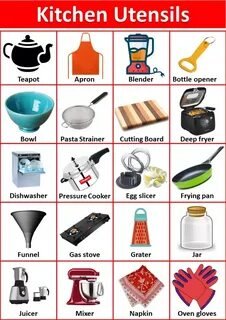
The kitchen is one of the most important areas in any home, restaurant, hotel, or food business. Preparing meals efficiently requires more than just ingredients and cooking equipment. Different kitchen utensils are designed to help with cutting, mixing, measuring, cooking, serving, and storing food.
From simple spoons and knives to specialized tools such as mandolines, whisks, graters, and pastry brushes, there are hundreds of kitchen utensils available today. Each tool has a specific purpose, although some utensils can be used for several different tasks.
If you are searching for 100+ names of kitchen utensils, this complete guide provides a large list organized into useful categories. It includes cutting tools, measuring tools, cooking utensils, baking tools, serving utensils, preparation tools, and other common kitchen accessories.
What Are Kitchen Utensils?
Kitchen utensils are handheld tools used for preparing, cooking, serving, and handling food. They are generally smaller and easier to handle than large kitchen appliances.
Examples include:
- Spoons
- Knives
- Forks
- Tongs
- Spatulas
- Whisks
- Graters
- Peelers
- Measuring cups
- Rolling pins
Kitchen utensils may be made from stainless steel, silicone, wood, plastic, glass, or other materials.
100+ Names of Kitchen Utensils
1. Cutting and Chopping Utensils
Cutting tools are essential for preparing vegetables, fruits, meat, herbs, and other ingredients.
- Chef’s Knife
- Paring Knife
- Bread Knife
- Utility Knife
- Boning Knife
- Cleaver
- Carving Knife
- Santoku Knife
- Fillet Knife
- Steak Knife
- Kitchen Shears
- Herb Scissors
- Vegetable Chopper
- Mezzaluna
- Cutting Board
A chef’s knife is one of the most versatile kitchen tools, while specialized knives are designed for particular ingredients or preparation techniques.
2. Mixing and Stirring Utensils
Mixing utensils are useful when combining ingredients, preparing sauces, stirring soups, and making batters.
- Wooden Spoon
- Mixing Spoon
- Slotted Spoon
- Whisk
- Balloon Whisk
- Flat Whisk
- Silicone Whisk
- Spatula
- Rubber Spatula
- Silicone Spatula
- Wooden Spatula
- Stirring Paddle
- Dough Scraper
- Bench Scraper
- Ladle
These utensils are used for everything from mixing cake batter to stirring sauces and soups.
3. Measuring Utensils
Accurate measurements are especially important when following recipes.
- Measuring Cups
- Dry Measuring Cups
- Liquid Measuring Cup
- Measuring Spoons
- Kitchen Scale
- Measuring Jug
- Measuring Beaker
- Portion Scoop
- Coffee Scoop
- Flour Scoop
Measuring spoons are commonly used for small quantities such as salt, spices, baking powder, and extracts.
4. Peeling and Grating Utensils
Peeling and grating tools help prepare vegetables, fruits, cheese, spices, and other ingredients.
- Vegetable Peeler
- Y-Peeler
- Julienne Peeler
- Apple Peeler
- Citrus Zester
- Box Grater
- Microplane Grater
- Cheese Grater
- Nutmeg Grater
- Ginger Grater
A vegetable peeler can quickly remove the skin from potatoes, carrots, cucumbers, and other vegetables.
5. Cooking Utensils
Cooking utensils are used directly during the cooking process.
- Cooking Spoon
- Slotted Spoon
- Turner
- Fish Turner
- Tongs
- Kitchen Fork
- Ladle
- Skimmer
- Spider Strainer
- Wooden Paddle
- Rice Paddle
- Potato Masher
- Meat Masher
- Basting Spoon
- Serving Spoon
Tongs are useful for turning meat, serving pasta, handling vegetables, and moving food during cooking.
6. Straining and Draining Utensils
Strainers and sieves help separate liquids from solid ingredients.
- Colander
- Fine-Mesh Strainer
- Kitchen Sieve
- Flour Sifter
- Tea Strainer
- Spider Strainer
- Pasta Strainer
- Oil Strainer
- Chinois
- Salad Spinner
A colander is commonly used for draining pasta and washing vegetables, while a fine-mesh strainer can be used for sauces, soups, and beverages.
7. Baking Utensils
Baking requires specialized tools for measuring, mixing, shaping, decorating, and handling dough.
- Rolling Pin
- Pastry Brush
- Pastry Cutter
- Dough Scraper
- Bench Scraper
- Pastry Blender
- Cookie Cutter
- Cake Tester
- Cake Spatula
- Offset Spatula
- Piping Bag
- Piping Tip
- Dough Whisk
- Cooling Rack
- Pastry Wheel
A rolling pin is commonly used to flatten dough, while pastry brushes can be used to apply butter, oil, milk, or egg wash.
8. Food Preparation Utensils
Food preparation involves many different tools for crushing, pressing, slicing, and processing ingredients.
- Garlic Press
- Potato Ricer
- Citrus Juicer
- Lemon Squeezer
- Avocado Slicer
- Egg Slicer
- Apple Corer
- Cherry Pitter
- Melon Baller
- Pineapple Corer
- Meat Tenderizer
- Mortar and Pestle
- Spice Grinder
- Nutcracker
- Can Opener
These tools can make food preparation faster and easier.
9. Serving Utensils
Serving utensils are designed to transfer prepared food from cooking dishes to plates or serving bowls.
- Serving Spoon
- Serving Fork
- Salad Tongs
- Pasta Server
- Pie Server
- Cake Server
- Gravy Ladle
- Soup Ladle
- Slotted Serving Spoon
- Ice Cream Scoop
- Cookie Scoop
- Serving Spatula
- Cheese Knife
- Butter Knife
- Jam Spoon
Serving utensils are especially useful when preparing meals for families, parties, restaurants, and other gatherings.
10. Specialty Kitchen Utensils
Some kitchen utensils are designed for specific ingredients or cooking techniques.
- Pizza Cutter
- Egg Separator
- Egg Slicer
- Meat Claws
- Oyster Knife
- Corn Holders
- Butter Spreader
- Honey Dipper
- Olive Pitter
- Fish Scaler
- Seafood Cracker
- Taco Holder
- Burger Press
- Meat Baster
- Pastry Lame
Specialty utensils may not be needed every day, but they can be extremely useful for particular recipes and food preparation tasks.
11. Coffee and Tea Utensils
Coffee and tea preparation can also require a variety of small kitchen tools.
- Tea Infuser
- Tea Strainer
- Coffee Scoop
- Milk Frother
- Coffee Tamper
- Espresso Spoon
- Coffee Stirrer
- Tea Spoon
- Sugar Tongs
- Tea Measuring Spoon
These utensils can help with brewing, measuring, serving, and preparing hot beverages.
12. Kitchen Utensils for Storage and Handling
Some tools help with transferring, covering, and handling food.
- Food Tongs
- Kitchen Tweezers
- Food Clips
- Jar Opener
- Bottle Opener
- Funnel
- Food Scoop
- Storage Container
- Measuring Scoop
- Silicone Food Cover
Although some of these items are technically kitchen accessories rather than utensils, they are commonly found in kitchens and are useful for food handling.
Materials Used to Make Kitchen Utensils
Kitchen utensils are available in many materials, and each material has different characteristics.
Stainless Steel
Stainless steel is commonly used for knives, spoons, whisks, tongs, graters, and other kitchen tools. It is durable and easy to clean.
Wood
Wooden spoons, paddles, rolling pins, and cutting boards are popular because they provide a natural appearance and are comfortable to handle.
Silicone
Silicone is commonly used for spatulas, whisks, baking brushes, and other utensils. It is flexible and useful for cookware where gentle contact is preferred.
Plastic
Plastic utensils can be lightweight and affordable. They are often used for measuring tools, food containers, and various preparation tools.
Glass
Glass is frequently used for measuring cups, bowls, and food preparation containers.
How to Choose Kitchen Utensils
Choosing the right kitchen utensils depends on
