

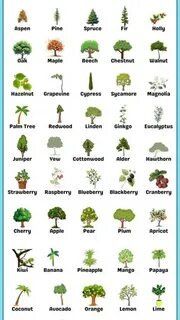
Trees are among the most important living organisms on Earth. They provide oxygen, absorb carbon dioxide, offer habitats for wildlife, protect soil, provide shade, and contribute to many ecosystems around the world. Trees are also important sources of fruits, nuts, timber, medicines, fibers, and other natural resources.
There are thousands of tree species across the planet, ranging from enormous rainforest trees to small flowering trees found in gardens and urban areas. Different trees grow best in different climates, including tropical forests, deserts, temperate regions, mountains, wetlands, and coastal areas.
If you are looking for names of trees, tree names around the world, types of trees, famous trees, tropical trees, fruit trees, flowering trees, or common tree species, this guide provides more than 100 names to explore.
What Is a Tree?
A tree is a perennial plant with a woody stem or trunk that generally supports branches and leaves. Trees vary greatly in size, shape, lifespan, and environmental requirements.
Some trees remain relatively small, while others can grow to extraordinary heights. Certain species can live for hundreds or even thousands of years.
Trees can generally be grouped into categories such as:
- Fruit trees
- Flowering trees
- Evergreen trees
- Deciduous trees
- Tropical trees
- Forest trees
- Palm trees
- Coniferous trees
- Ornamental trees
- Native trees
100+ Names of Trees Around the World
1. Tropical Trees
Tropical trees grow primarily in warm regions. Tropical forests contain some of the world’s greatest plant diversity.
- Mahogany
- Teak
- Ebony
- Kapok
- Rubber Tree
- Rosewood
- African Padauk
- Iroko
- African Blackwood
- Baobab
- Flamboyant Tree
- Breadfruit Tree
- Jackfruit Tree
- Coconut Palm
- Oil Palm
- Rain Tree
- Yellow Flame Tree
- African Tulip Tree
- Strangler Fig
- Cannonball Tree
Many tropical trees provide important resources for local communities, including fruits, timber, oils, fibers, and traditional materials.
2. Fruit Trees
Fruit trees produce edible fruits and are grown in gardens, farms, orchards, and forests around the world.
- Mango Tree
- Apple Tree
- Orange Tree
- Lemon Tree
- Lime Tree
- Guava Tree
- Avocado Tree
- Papaya Tree
- Banana Plant
- Pawpaw Tree
- Coconut Palm
- Date Palm
- Olive Tree
- Peach Tree
- Pear Tree
- Plum Tree
- Cherry Tree
- Apricot Tree
- Pomegranate Tree
- Fig Tree
- Persimmon Tree
- Mulberry Tree
- Breadfruit Tree
- Jackfruit Tree
- Lychee Tree
- Cashew Tree
- Cocoa Tree
- Star Apple Tree
- Tamarind Tree
- Bael Tree
Fruit trees are important for food production and can support both human communities and wildlife.
3. Flowering Trees
Flowering trees are valued for their colorful blooms and are commonly planted in gardens, parks, streets, and public spaces.
- Cherry Blossom Tree
- Jacaranda Tree
- Magnolia Tree
- Dogwood Tree
- Crape Myrtle
- Frangipani Tree
- Golden Shower Tree
- Flame Tree
- African Tulip Tree
- Royal Poinciana
- Apple Blossom Tree
- Orchid Tree
- Silk Tree
- Laburnum
- Redbud Tree
- Hawthorn Tree
- Trumpet Tree
- Cassia Tree
- Tabebuia
- Wisteria Tree
Flowering trees can add color and seasonal interest to landscapes.
4. Evergreen Trees
Evergreen trees generally retain their foliage throughout the year, although individual leaves are naturally replaced over time.
- Eucalyptus
- Pine
- Cedar
- Fir
- Spruce
- Cypress
- Juniper
- Holly
- Laurel
- Olive
- Camphor Tree
- Tea Tree
- Live Oak
- Southern Magnolia
- Araucaria
Evergreen species can be found in many different climates, from warm regions to mountainous environments.
5. Deciduous Trees
Deciduous trees typically shed their leaves during a particular season or period each year.
- Oak
- Maple
- Birch
- Beech
- Ash
- Elm
- Poplar
- Aspen
- Willow
- Sycamore
- Chestnut
- Walnut
- Hickory
- Cottonwood
- Horse Chestnut
Many deciduous trees are known for dramatic seasonal changes, particularly in temperate regions.
6. Coniferous Trees
Conifers are a major group of trees that commonly produce cones and often have needle-like or scale-like leaves.
- Scots Pine
- White Pine
- Douglas Fir
- Norway Spruce
- Blue Spruce
- Red Cedar
- Western Red Cedar
- Giant Sequoia
- Coast Redwood
- Larch
- Hemlock
- Yew
- Cypress
- Juniper
- Balsam Fir
Coniferous forests are especially important in many northern and mountainous regions.
7. Famous and Remarkable Trees
Some trees are particularly famous because of their age, size, cultural importance, unusual appearance, or ecological role.
- Giant Sequoia
- Coast Redwood
- Dragon Blood Tree
- Baobab
- Banyan Tree
- Bodhi Tree
- General Sherman Tree
- Methuselah Tree
- Rainbow Eucalyptus
- Kapok Tree
- Monkey Puzzle Tree
- Joshua Tree
- Bristlecone Pine
- Wollemi Pine
- African Baobab
Some of these trees are known for extraordinary longevity, while others are famous for their unusual shapes or historical and cultural significance.
8. African Tree Names
Africa contains diverse ecosystems ranging from tropical forests to savannas and deserts.
Popular African tree names include:
- African Baobab
- Iroko
- Shea Tree
- African Mahogany
- African Teak
- Mopane
- Acacia
- Sausage Tree
- Marula
- Umbrella Thorn Acacia
- Flame Tree
- African Ebony
- Tamarind
- Neem
- African Breadfruit
Many of these trees are important for food, traditional uses, wildlife habitats, shade, and local economies.
9. Asian Tree Names
Asia contains a huge variety of forests, plantations, gardens, and native tree species.
Examples include:
- Japanese Maple
- Ginkgo
- Sakura
- Neem
- Banyan
- Peepal
- Sandalwood
- Teak
- Jackfruit
- Mango
- Indian Banyan
- Deodar Cedar
- Indian Rosewood
- Sal Tree
- Arjun Tree
10. North American Tree Names
North America is home to many well-known forest and landscape trees.
Examples include:
- Sugar Maple
- Red Maple
- White Oak
- Red Oak
- American Beech
- Black Walnut
- American Elm
- Eastern White Pine
- Douglas Fir
- Giant Sequoia
- Coast Redwood
- Ponderosa Pine
- Bald Cypress
- Cottonwood
- Black Cherry
11. European Tree Names
Europe has many native trees that have played important ecological and cultural roles.
Examples include:
- English Oak
- European Beech
- Silver Birch
- Scots Pine
- Norway Spruce
- European Ash
- European Larch
- European Hornbeam
- Horse Chestnut
- Common Hazel
- European Rowan
- European Linden
- Olive Tree
- Sweet Chestnut
- European Yew
12. Australian Tree Names
Australia has many unique tree species adapted to different environments.
Examples include:
- Eucalyptus
- Wattle
- Bottle Tree
- Paperbark
- Jarrah
- Karri
- Banksia
- Huon Pine
- Moreton Bay Fig
- Queensland Kauri
Australian trees can be found in rainforests, woodlands, coastal areas, dry regions, and other habitats.
How to Choose Trees for a Garden
If you are considering planting a tree, it is important to think about more than appearance.
Consider the Climate
Choose a tree that can grow successfully in your local climate and seasonal conditions.
Consider Available Space
Some trees eventually become very large. Check the mature size before planting near buildings, roads, power lines, or other structures.
Think About Maintenance
Some trees produce significant amounts of fruit, leaves, seeds, or branches. Consider how much maintenance you are prepared to provide.
Consider Soil Conditions
Different trees prefer different soil types, drainage conditions, and levels of moisture.
Choose the Right Location
Think about sunlight, water availability, surrounding structures, and the space needed for roots and branches.
Why Are Trees Important?
Trees provide many environmental and social benefits.
They can:
- Absorb carbon dioxide
- Produce oxygen through photosynthesis
- Provide habitats for animals
- Reduce soil erosion
- Offer shade
- Help regulate local temperatures
- Support biodiversity
- Provide fruits and nuts
- Supply timber and other materials
- Improve landscapes
- Support human livelihoods
Forests and individual trees can also play important roles in water cycles and ecosystem health.
SEO Keywords for Tree Content
If you are creating a website about nature, gardening, education, or lifestyle, the following keywords can be useful:
- Tree names
- Names of trees
- Names of trees around the world
- Types of trees
- Tree species
- Common tree names
- Tropical tree names
- Fruit tree names
- Flowering tree names
- Evergreen tree names
- Deciduous tree names
- Forest tree names
- Famous trees
- African tree names
- Asian tree names
- European tree names
- Australian tree names
- North American tree names
- Trees and their names
- Tree species list
Use these terms naturally in your headings and content rather than repeating them excessively.
Frequently Asked Questions
How many types of trees are there in the world?
There are tens of thousands of known tree species worldwide. The exact number depends on how tree species are defined and classified, and scientific research continues to identify and document tree diversity.
What are the most common types of trees?
Common tree groups include flowering trees, conifers, evergreen trees, deciduous trees, fruit trees, and tropical trees.
What is the most famous tree in the world?
There is no single officially recognized “most famous” tree. Trees such as the baobab, giant sequoia, banyan, cherry blossom, and olive tree are widely recognized for their cultural, ecological, or visual significance.
What are some fruit tree names?
Popular fruit trees include mango, apple, orange, lemon, lime, guava, avocado, peach, pear, plum, cherry, fig, pomegranate, cashew, and olive.
What are some flowering tree names?
Examples include jacaranda, magnolia, cherry blossom, dogwood, royal poinciana, golden shower tree, redbud, frangipani, and orchid tree.
Conclusion
There are thousands of tree species around the world, each with unique characteristics, habitats, and ecological roles. From tropical trees such as mahogany, teak, and baobab to temperate species such as oak, maple, birch, and beech, the world’s trees represent an enormous variety of plant life.
Fruit trees provide food, flowering trees bring color to landscapes, evergreen trees maintain foliage throughout much of the year, and coniferous trees form important forests in many regions.
Learning the names of trees around the world is useful for students, gardeners, nature lovers, writers, and anyone interested in the natural environment. It can also help readers recognize different tree species and understand their importance.
Whether you are searching for 100+ tree names, types of trees, tropical trees, fruit trees, flowering trees, famous trees, or tree species from different countries, this list provides a broad starting point for exploring the fascinating world of trees.
